Another good break for friends of mine this week. My friends Chris, Alex and Dave opened the doors of their bar/restaurant Chair de Poule* in the 11th arrondissement of Paris. It's a small but charming place that intends to serve food at the bistro end of nouvelle cuisine (food's still a few weeks off) and knowing Chris' pedigree as a farm-to-plate type of chef, having worked in several countries, the food will be nothing short of top class. The place is located on the corner of rue St-Maur and rue des Trois Bornes, in an area with no shortage of lively bars, cafés and restaurants for a good night all round. There's a website too under construction. You'll be hearing more of this in the months to come.
Chair de Poule, 141, rue St-Maur, 75011 Paris. Métro Parmentier/Goncourt Tel: 01.43.38.89.06
View Larger Map
*The name means literally 'chicken flesh' in French, but idiomatically, it's closer to 'goose flesh'.
Showing posts with label Food. Show all posts
Showing posts with label Food. Show all posts
Wednesday, September 23, 2009


Sunday, May 20, 2007
British Vegetarians Free to Eat Shit Food Again
The company that so charmingly calls itself 'Masterfoods' has announced that it is to return to making vegetarian-friendly chocolate bars, following outcries from British vegetarians and, I kid you not, forty MPs that signed a petition calling on Mars bars to be reunited with the UK's lettuce munchers.
I was, for eight years in my youth, a vegetarian, until I copped on in my mid-twenties and with a renewed sense of adventure started trying anything that was put in front of me. So I know all about rennet, gelatine, finings and all those other hidden animal by-products that provide pitfalls for the diligent vegetarian (though I think many of them relish the challenge of examining the small-print on the packaging every time they shop, just as the more puritanical of religious folk rejoice in the existence of the world's carnal pleasures for giving them something to rail against). It is this culinary puritanism that is the most unpleasant and depressing thing about vegetarianism, people who avoid eating meat are depriving themselves of culture, while at the same time giving themselves a nice, uncostly, consumer-driven political cause to espouse. Vegetarians who claim to love food are like those people that call themselves film buffs but can't bring themselves to watch a black and white film.
I know that there are many vegetarians that do qualify, at least in a partial sense, as gourmands, and my own years of vegetarianism introduced me to a range of fruit and vegetables that, as an Irish male, I would probably have otherwise avoided with a forty-foot pole, but such vegetarians are very much in the minority. Why else is there a thriving trade in frozen and processed food that comes emblazoned with the imprimatur of the Vegetarian Society? Veggies getting hot and bothered about not being able to eat Mars bars or Snickers is further proof of this; if you can cut meat, fish and poultry out of your diet with an unstintingly pedantic application of your 'ideals' should it not be too difficult to avoid eating industrially-produced chocolate, that given the scant amount of cocoa solids contained therein, barely merits the word 'chocolate' anyway? Real foodies eat meat and vegetables. Live a little folks. The only good reasons for abstaining from any type of food or drink are ones of health. Vegetarianism is not one of them.
I was, for eight years in my youth, a vegetarian, until I copped on in my mid-twenties and with a renewed sense of adventure started trying anything that was put in front of me. So I know all about rennet, gelatine, finings and all those other hidden animal by-products that provide pitfalls for the diligent vegetarian (though I think many of them relish the challenge of examining the small-print on the packaging every time they shop, just as the more puritanical of religious folk rejoice in the existence of the world's carnal pleasures for giving them something to rail against). It is this culinary puritanism that is the most unpleasant and depressing thing about vegetarianism, people who avoid eating meat are depriving themselves of culture, while at the same time giving themselves a nice, uncostly, consumer-driven political cause to espouse. Vegetarians who claim to love food are like those people that call themselves film buffs but can't bring themselves to watch a black and white film.
I know that there are many vegetarians that do qualify, at least in a partial sense, as gourmands, and my own years of vegetarianism introduced me to a range of fruit and vegetables that, as an Irish male, I would probably have otherwise avoided with a forty-foot pole, but such vegetarians are very much in the minority. Why else is there a thriving trade in frozen and processed food that comes emblazoned with the imprimatur of the Vegetarian Society? Veggies getting hot and bothered about not being able to eat Mars bars or Snickers is further proof of this; if you can cut meat, fish and poultry out of your diet with an unstintingly pedantic application of your 'ideals' should it not be too difficult to avoid eating industrially-produced chocolate, that given the scant amount of cocoa solids contained therein, barely merits the word 'chocolate' anyway? Real foodies eat meat and vegetables. Live a little folks. The only good reasons for abstaining from any type of food or drink are ones of health. Vegetarianism is not one of them.
Friday, May 04, 2007
Force Feeding

Back in March I reviewed the Austrian documentary Our Daily Bread, which took a cool, dispassionate look at the production process in European agribusiness. Despite the formal placidity of the film it was implicitly critical of the practices it portrayed and now another film has come from the same country that covers much of the same ground while taking a more avowedly polemical stance. We Feed the World (which takes its name from the motto of the German seedling multinational Pioneer, which features in the film) is directed by Erwin Wagenhofer and its target is the commodification and over-rationalisation of food production. While Our Daily Bread offered a critique by its simple unvarnished mounting of scenes of industrial labour, We Feed the World goes straight for a broadside against the deleterious effects of homogenised food and the food subsidies of the developed world (in particular the EU, the US and Japan) and its subsequent dumping of food in markets such as West Africa, making it impossible for local farmers to survive.
The chief protagonist is the Swiss sociologist and UN Special Rapporteur Jean Ziegler, who delivers statistic after damning statistic to give the film its primary argument - the pauperisation of the Third World in order to benefit Western producers. The other side is represented in the opening scene by an Austrian farmer who affirms that the only way to maintain one's standard of living at previous levels is to expand one's farm by up to five times. This has resulted in a third of Austrian farmers leaving the land since the country's accession to the EU in 1995 and as the farmer says, a chief motive for this is the public's demand for cheap food. Free marketers will of course ask here what the problem is as according to them, the market resolves such problems of its own accord. There are however too many ill effects to allow this argument to go unchallenged.
One of these is the homogenisation of food production, witnessed in a visit to a fish market in Lorient in Brittany and a trip aboard a the trawler of a small Breton fisherman who prides himself on making small hauls, thereby bringing in fish unblemished by the effects of enormous nets and increased underwater pressure. There is also Karl Otrok, the head of Pioneer Romania, who admits that he prefers organic vegetables to the uneconomical, tasteless and aesthetically attractive specimens produced by his company's products, and who says that Western agribusiness has already 'fucked up' the West's agriculture. A visit to the enormous greenhouses of Almería (the 'winter vegetable' capital of the world) shows the effects of an economic miracle that is now in danger of producing an environmental catasprophe. The last word is given to Peter Brabeck, CEO of Nestlé, who is obviously on a different wavelength to the film's makers, and who speaks optimistically of the future, seeing only progress. Ziegler has already argued that Brabeck is himself at the mercy of the shareholders and not in a very good position to be too cocksure of his own future prospects.
We Feed the World is occasionally a bit too didactic and its arguments are likely to be already shared by many of its audience but it has a number of qualities that make it compulsive viewing: firstly, all the interviewees - from Ziegler to Brabeck - are all brilliant, fluid speakers, secondly, there is a lot to learn from the film, particularly in terms of agronomy and botany and thirdly, the scenes of people at work are fascinating, the repetition and attention to detail mesmerising just like Gustave Caillebot's celebrated 'Les raboteurs de parquet'. When this labour gives way to mechanical rationalisation later in the film the effect is jolting. If the arguments of the film are somewhat predictable, its method and formal composition are superb. Should be seen, preferably on a double-bill with Our Daily Bread.
Thursday, April 19, 2007
Can I Have a Doggy Bag Instead?
A Hong Kong restaurant has taken to fining customers 64¢ per pound for their leftovers, in order to cut down on food waste, which, according to this article in the Christian Science Monitor, is becoming a serious problem on the island. From my years in the restaurant business I know how bulky - and heavy - food waste can be so the measure is understandable, if draconian. Does this mean that the custom of the mainland Chinese detailed in the above ad from HSBC does not apply in Hong Kong?
Wednesday, March 21, 2007
Give Us This Day....

It's a few days since I saw Nikolaus Geyrhalter's documentary Our Daily Bread, which offers an oblique and often impassive look at European agribusiness, or rather at the industry which underpins it. The title evokes King Vidor's socialist drama of the same name from 1934 though there is surprisingly little polemic in Geyrhalter's stately enigmatic film; though the film pledges over the opening title to donate 5% of its royalties to organisations with a commitment to producing and supporting organic food, there is no damning endictment of the production process, even as we see tomatoes, chillis and cucumbers being harvested on an industrial scale by placid migrant workers, piglets being gelded, pigs and fish alike being systematically gutted by machines, cows calving in pristinely clinical surroundings, cows being milked and later slaughtered in much the same. But then the polemic probably is there but in a latent sense. There is even no commentary nor any dialogue to speak of, and what there is appears to be natural and is left untouched by subtitles.
There is a similarity to Abol-Fazl Jalili's films, such as Dance of Dust or Delbaran, in the unflinching, steady tableaux, almost all framed with identical geometrical precision, and which invite one to be at turns repulsed, intrigued or bored. My own favourite sequence was the descent into a German salt mine, which is like something out of a science fiction film, the saline harvest gathered by two little identical-looking men, who resemble a cross between the Super Mario Brothers and Cerberus in their underground desert. There are scenes that might put some off touching meat ever again - though I, a recovering vegetarian, will have no such qualms - but the overall effect of the film is a quietly disquieting one, something that similar, more ideologically explicit, films such as Koyaanisqatsi and Baraka fail to achieve. Our Daily Bread is a film that allows both its subject and its audience a lot of space and it is all the better for that.
Wednesday, February 07, 2007
Sligo's Gift to Central Europe
A man from my beloved Ballymote Eduard Taaffe was twice Prime Minister for the Hapsburgs in the late 19th century. To be completely accurate he was a descendant of the Ballymote Taaffes though he did retain the title Baron of Ballymote, without ever really exercising power in his fief. He was a man whose political liberalism compared very well with other statesmen of that century, particularly with regard to the extension of suffrage and his policies on the Slavic minorities. His ancestor Nicholas Taaffe, the 6th Viscount, who was born in Ballymote, is credited with introducing the potato to Silesia in 1763. Who would have thought that a Sligoman should be indirectly responsible for that staple of Central European cuisine: the potato dumpling?
Sunday, August 27, 2006
High Living on Fatty Liver
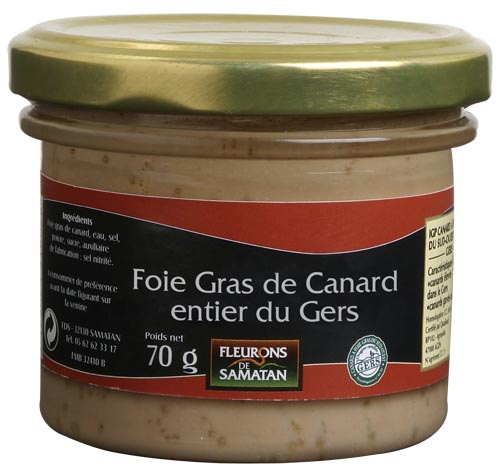
As of last week it has been illegal to sell, and therefore serve foie gras in Chicago, as a result of a a by-law passed by the City Council. Predictably enough it has been passed because of the alleged cruelty of force-feeding the geese and ducks involved in the production of the greasy liver pâté. All very well but I wonder if Chicago City Council passed a motion condemning the Israeli bombing of Lebanese civilians? I think it is highly unlikely, and the sad truth is that fowl in the south of France can muster more compassion in the West than Arabs in southern Lebanon.
Another news story on the cruelty-to-animals front is a campaign to make it illegal to slaughter horses in the US for consumption abroad. Willie Nelson and Bo Derek (remember her?) are among the, er, celebrities, that have lent their support to the campaign. I assume that many of these good people are meat eaters; as Dennis Leary used to say, you only spare the cute animals. Eating horse-flesh is one of those horrendous things that Johny Foreigner gets up to and I can understand the indignation of patriotic animal lovers seeing American horses being packed off to end up on a European dinner plate. I had foal, roasted and served in a red-wine sauce in Slovenia a few weeks ago, and I have to say I was disappointed - tough and flavourless the meat was but I would give it a go again, whatever the provenance of the equine beast.
I was a vegetarian for eight years and for much of that time I defended my rationale behind my choice not to eat meat. Now five years on from going back to meat I can no longer do that. I turned vegetarian when I was 18 and before that time I had probably never eaten in a half-decent restaurant. Nor had I left Ireland. When I started working in the catering trade, and living in France, I soon realised what a dull, philistine choice vegetarianism is. While I know that not all vegetarians are self-righteous and puritanical about not eating meat, many are. There is something infinitely smug about vegetarianism and it also bespeaks a depressing lack of curiosity about the world, about culture and about food itself. It is no coincidence that many vegetarians do not care very much for vegetables or pulses. And other than the obvious (and very different) case of Hindu vegetarianism, abstention from meat is something that exists almost exclusively in English-speaking and Nordic countries. There is a clear link with religious self-righteousness there. The thing that annoys me the most about those that abstain from meat is the way that they moan about not being catered for in countries where vegetarians are non-existent (i.e. most of mainland Europe, Latin America and Africa, and a good stretch of Asia); why in God's name should a French brasserie owner or the proprietor of a Spanish tapas bar go out of their way to provide an elaborate meat-free dish for some Anglophone with a bizarre dietary penchant, and who in most cases, makes no effort to order in the local language in the first place?
Another feature of vegetarianism, and associated strains of anthropomorphism is the consumerist easy political choice it offers; one can have a conscience without having to think about any of the nasty things going on in the world, without even having to vote. I wonder if it sits easy on the conscience of a mobile-phone-owning vegetarian the knowledge that the current war in south-east Congo is being fuelled by the tungsten trade, which is vital to the mobile telecommunications industry? It may or may not, and many people would not be too bothered. And perhaps they shouldn't be. Other than feeling mild guilt, there is not an awful lot that any of us can do about it. I have yet to meet anybody that has given up using a mobile for this reason. For my part it does not really bother me that a duck or a goose suffers during the production of foie gras. I would like to say it does, but I really do not care, even if I can hardly call myself a big fan of the stuff. I just find it depressing that people in the US or elsewhere would interest themselves in foie gras only because of its association with avian cruelty. One thing that always annoyed me when I was vegetarian was somebody pointing out for the umpteenth time that Adolf Hitler was a vegetarian too, as if there were any correlation between compassion for animals and being a psychopath. I don't do that when discussing vegetarianism but vegetarians do share a certain belief that they are absolutely right married with a lack of adventure of anything beyond what they know.
Another news story on the cruelty-to-animals front is a campaign to make it illegal to slaughter horses in the US for consumption abroad. Willie Nelson and Bo Derek (remember her?) are among the, er, celebrities, that have lent their support to the campaign. I assume that many of these good people are meat eaters; as Dennis Leary used to say, you only spare the cute animals. Eating horse-flesh is one of those horrendous things that Johny Foreigner gets up to and I can understand the indignation of patriotic animal lovers seeing American horses being packed off to end up on a European dinner plate. I had foal, roasted and served in a red-wine sauce in Slovenia a few weeks ago, and I have to say I was disappointed - tough and flavourless the meat was but I would give it a go again, whatever the provenance of the equine beast.
I was a vegetarian for eight years and for much of that time I defended my rationale behind my choice not to eat meat. Now five years on from going back to meat I can no longer do that. I turned vegetarian when I was 18 and before that time I had probably never eaten in a half-decent restaurant. Nor had I left Ireland. When I started working in the catering trade, and living in France, I soon realised what a dull, philistine choice vegetarianism is. While I know that not all vegetarians are self-righteous and puritanical about not eating meat, many are. There is something infinitely smug about vegetarianism and it also bespeaks a depressing lack of curiosity about the world, about culture and about food itself. It is no coincidence that many vegetarians do not care very much for vegetables or pulses. And other than the obvious (and very different) case of Hindu vegetarianism, abstention from meat is something that exists almost exclusively in English-speaking and Nordic countries. There is a clear link with religious self-righteousness there. The thing that annoys me the most about those that abstain from meat is the way that they moan about not being catered for in countries where vegetarians are non-existent (i.e. most of mainland Europe, Latin America and Africa, and a good stretch of Asia); why in God's name should a French brasserie owner or the proprietor of a Spanish tapas bar go out of their way to provide an elaborate meat-free dish for some Anglophone with a bizarre dietary penchant, and who in most cases, makes no effort to order in the local language in the first place?
Another feature of vegetarianism, and associated strains of anthropomorphism is the consumerist easy political choice it offers; one can have a conscience without having to think about any of the nasty things going on in the world, without even having to vote. I wonder if it sits easy on the conscience of a mobile-phone-owning vegetarian the knowledge that the current war in south-east Congo is being fuelled by the tungsten trade, which is vital to the mobile telecommunications industry? It may or may not, and many people would not be too bothered. And perhaps they shouldn't be. Other than feeling mild guilt, there is not an awful lot that any of us can do about it. I have yet to meet anybody that has given up using a mobile for this reason. For my part it does not really bother me that a duck or a goose suffers during the production of foie gras. I would like to say it does, but I really do not care, even if I can hardly call myself a big fan of the stuff. I just find it depressing that people in the US or elsewhere would interest themselves in foie gras only because of its association with avian cruelty. One thing that always annoyed me when I was vegetarian was somebody pointing out for the umpteenth time that Adolf Hitler was a vegetarian too, as if there were any correlation between compassion for animals and being a psychopath. I don't do that when discussing vegetarianism but vegetarians do share a certain belief that they are absolutely right married with a lack of adventure of anything beyond what they know.
Subscribe to:
Posts (Atom)

 Posts
Posts





